

😼 Oneisall enters the $200 self-cleaning litter box war with a modular design that's actually easy to deep clean
💇 Former Petco CEO Ron Coughlin takes the chairman seat at Zoom Room as the franchise targets 550 locations by 2030
💵 15% of pet owners say cost forced them to choose euthanasia, and $500 is where vet bills break the household budget
💩 Mars bets on experiential poop marketing at Orlando airport to push IAMS Proactive 5
🇨🇳 China's pet market hit $43B last year with only 22% household penetration — the growth ceiling is nowhere in sight
🤔 The hormone that shortens big dogs' lives might actually be protecting them from dementia

I spent two days and a morning on the show floor at Global Pet Expo last week, and by the end of day one, I'd already lost count of how many times I heard nearly the same pitch dressed up in different packaging.
Clean ingredients. Functional health benefits. Human-grade formulations.
Premium positioning aimed at the modern pet parent who treats their dog or cat like a dependent they'd claim on their taxes if the IRS allowed it (Someone actually tried that last year).
None of this is wrong. A lot of it was genuinely exciting to nerd out on. But from the perspective of the end consumer trying to choose between a sea of boldly colored bags making the same claims, it is just no longer differentiating.
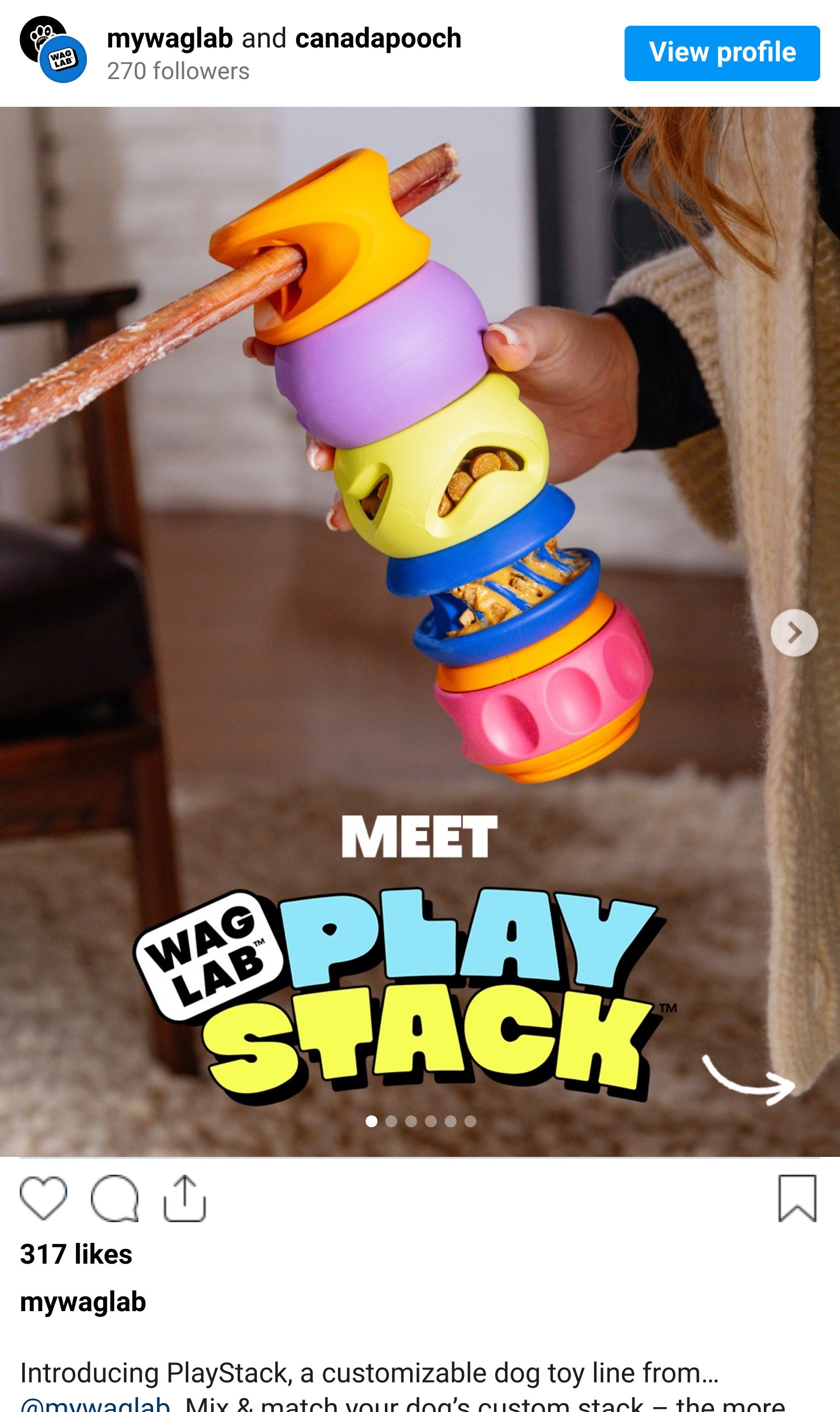
That said, there was real innovation worth noting, like the modular enrichment toy line Playstack from Wag Lab.
But across consumables, whether pet food, treats, or supplements, the battles are no longer happening at the product level.
They are happening at the level of label marketing, branding, positioning, and target audience.
The products themselves are not starkly different from one another on the surface.
At least not to the pet owner standing in an aisle or scrolling a feed, trying to decide between six bags that all say roughly the same thing.
The data supports what the show floor made obvious.
A Packaged Facts survey from September 2025 found that 47% of pet owners now believe private-label brands provide comparable quality to national brands.

That is up 10 points from 37% just two years earlier.
Among those who switched food in the prior 12 months, roughly a third of dog owners and nearly a third of cat owners traded down to a cheaper brand.
Shannon Landry Brown of Packaged Facts warned that this trade-down behavior "may be sticky."
Owners who switch and find their pet tolerates the food are unlikely to switch back.
The premium end is not immune.
The number of active organic pet food brands globally reached 490+ in 2025, up 48% from roughly 330 in 2020.
NielsenIQ data presented at GPE 2025 showed "Natural" now accounts for 43% of total pet food dollar share.
Functional claims around mood, stress, skin and coat, microbiome, brain health, immune support, and joint health are proliferating across the category.
Human-grade pet food, while still small at roughly 1% of total pet food share, posted 14.8% dollar growth in 2024.
Every brand is chasing the same positioning, and the returns on incremental claim-layering are diminishing.
Part of what makes this possible is that the barrier to launching a pet food brand has never been lower.
There are roughly 400 pet food manufacturing establishments in the US, and the co-packing segment is deeply fragmented.
This is not news to anyone who has been in the industry long enough.
Most brands do not own the manufacturing process.
Multiple labels come off the same production line, from the same plant, using similar ingredient sourcing. The only thing that changes is the bag.
What is new is how visible that convergence has become to the consumer.
A few brands are finding ways to stand out through the packaging itself.
We had the pleasure of meeting Juliette and Jeremy, the founders of Beeb's, at GPE.
Their single-ingredient treat company has built what may be the first fully plastic-free, refillable packaging system in pet, turning something most brands treat as an afterthought into a genuine differentiator.

beeb’s lamb lung .5oz pocket tube
The format wars tell the same story.
For years, the premium kibble segment positioned itself against fresh, freeze-dried, and raw formats using science-backed claims about nutrient density and biological appropriateness.
Orijen, made by Champion Petfoods, was arguably the most credible voice in that argument.
The brand spent 35 years building its reputation around high meat inclusion kibble manufactured exclusively in company-owned facilities across Kentucky and Alberta.
The former CEO once put it simply: "We don't make food for anyone else, and nobody else makes our food."
Then, three weeks before GPE 2026, Orijen launched FRESHPREY.
A frozen, sous-vide fresh food line. The brand that built its identity defending kibble as the superior format is now making fresh food.
You can frame that as innovation. You can also frame it as an admission that format differentiation has a shelf life too.
Mars, which acquired Champion in 2023, also bought fresh DTC brand Nom Nom in 2022.
Blue Buffalo is launching Love Made Fresh nationally. General Mills is importing Edgard & Cooper from Europe.
The fresh lane is getting as crowded as the premium kibble lane was five years ago.
Even the public markets are reflecting the squeeze.
Freshpet lowered its FY2025 net sales growth guidance and removed its $1.8B net sales target for 2027 entirely, citing a "reduction in category growth rate."
Bloomberg Intelligence analyst Diana Rosero-Pena told Petfood Forum 2025 that value-tier pet food may outgrow premium in 2025 at 6% versus 5%.
That is a historically unusual inversion.
So if the product is no longer the edge, what is?
The conference programming at GPE 2026 offered a clear answer. And it had nothing to do with what goes inside the bag.
What the show floor wasn't saying
While we were doing interviews and sprinting across the show floor for two and a half days, Jeff Mard of Channel M, was sitting in select sessions and recording them.
He was kind enough to share those recordings with us, and they painted a very different picture of where the industry's competitive future is heading.
The consistent throughline was distribution infrastructure.
Not distribution in the old sense of getting onto shelves.
Distribution in the new sense of getting found, getting chosen, and getting purchased through content, creators, and algorithms.
Start with TikTok Shop.
In a session led by TikTok Shop US's own team on March 24, Aileen, Head of Global Key Accounts, described pet as "one of the fastest growing sectors in TikTok Shop US," with the pet category seeing "explosive growth of over 150% year over year."

The broader TikTok Shop US platform grew GMV 120% YoY.
Daily active consumers doubled. The creator count increased 250%. Merchants doing $10M or more in annual sales on the platform grew 76%.
These are not experimental numbers.
TikTok Shop US now has over 189M monthly active users and more than 100M daily actives spending an average of 117 minutes per day on the platform.
The fastest growing demographic is 25 to 34 year olds, now approaching 40% of the user base.
Over 65% of users say they rely on creator recommendations when deciding what to buy.
The pet-specific commerce data reinforces the point.
NielsenIQ's tracked US data shows pet supplies on TikTok jumped from $34M to $158M in the trailing 52 weeks ending February 2025.

That is a single year.
Separately, Karyn Schoenbart of Duo Partners presented Charm.io data at GPE 2026 putting global TikTok Shop pet supply sales at $780M, forecasted to exceed $1.5B this year.
The US and global figures are measuring different geographies, but they tell the same story from different altitudes.
The case studies are instructive. PetPivot, maker of an auto-cleaning litter box, moved an estimated $18M on a single SKU through TikTok Shop.
@coltomn Never scooping cat crap again #cats #catlitter #litterbox #petpivot #automaticlitterbox
FastMoss data suggests the actual cumulative figure may be closer to $24.5M.
The top pet creator on TikTok Shop generated $3M in revenue.
Products were selling at $150 to $273 price points. This is not a discount channel. It is a discovery-to-conversion engine where the content system, not the product, is doing the heavy lifting.
TikTok's own halo study with Fenty Beauty found that TikTok Shop generated 6.7x incremental sales beyond on-platform purchases, with over 30% of that coming from new customers.
The Amazon-TikTok Buy with Prime integration, launched in August 2024, now enables in-app Amazon purchases directly from TikTok.
And 97% of TikTok Shop purchasers also shop on Amazon. What gets discovered on TikTok gets bought everywhere.
Lindsay White, operations manager at King Lou (a small, family-owned human-grade pet treat brand), put it simply during the TikTok Shop session at GPE: "You can't treat TikTok Shop like any other channel because it's not. This isn't Amazon. People are coming to TikTok primarily for entertainment purposes first."
King Lou's founder, Clayton, does live streams at least five times a week, talking directly to customers and maintaining premium pricing across channels.

King Lou running a TikTok Live
The brand is small. TikTok makes it look big. That is the point.
Dr. Marty's Nature's Blend, a freeze-dried raw line from Golden Pet Brands, offers another angle on the same principle.
As retail marketing director Jamie Gunter detailed at GPE 2026, the brand delivers 370 million TV impressions per month, targeting 35 to 45 year old upper income pet owners on Animal Planet, TLC, and national news programming.
But the ads don't drive to a DTC checkout.
They drive to a store locator that funnels traffic into independent pet retailers. The team tracks new visitors to that locator as their primary KPI for whether the advertising is working.
The real infrastructure play is what happens after.
As a DTC brand, Golden Pet Brands (recently spun off from Golden Hippo) has built an opt-in SMS subscriber base through its direct channel.
When an independent shop starts carrying the line, the team alerts nearby subscribers that Dr. Marty is now available at a store near them.
Click-through rates on those retail texts run 3x higher than standard DTC sale messages.
The product is good.
But the system that connects a TV viewer to a store locator to a text message to a neighborhood pet shop is what scales it.
AI changes the math on all of this.
If TikTok Shop is the new channel, AI is the force multiplier that makes it scalable.
Ted Murphy, CEO of IZEA, delivered the Pet Summit keynote at GPE 2026 and made the case that AI content production is approaching zero marginal cost.
His company ran an experiment replacing a human YouTube creator with an AI-driven content pipeline.

The results: 33% more views, 18% more watch time, 37% more subscribers, and 4x the revenue.
His broader prediction is that by 2028, more than half of all new online content created will be AI-generated.
The platforms are already building for this future.
TikTok's Symphony Creative Studio generates URL-to-video ads in under 60 seconds, with AI dubbing, lip-sync, and custom digital avatars built from just 10 minutes of founder footage.
Early tests show 1.8x purchase increases and a 13% lift in return on ad spend.
Meta's Advantage+ creative suite is used by over 4M advertisers, generating 15M or more new ad creatives monthly with a reported 22% higher ROAS on average.
YouTube integrated Google's Veo video model into Demand Gen campaigns in March 2026.
The cost benchmarks from adjacent CPG are striking.
Mondelez International, working with Publicis and Accenture on a $40M+ AI content platform, reports 30-50% production cost reductions across Chips Ahoy, Milka, and Oreo.
Unilever's digital twins initiative produces product imagery 2x faster and 50% cheaper, with TRESemmé Thailand achieving an 87% reduction in content creation costs.
Unilever went from producing roughly 20 creative assets per campaign to 400 per product.
Mars Petcare is the most advanced pet-specific player, using Vizit AI for image optimization on Amazon and Chewy with 30% higher conversion rates.
But most pet brands are nowhere near this.
A PetfoodIndustry.com survey of 119 pet food professionals in September 2025 found that more than half are still exploring or planning AI marketing rather than actively implementing it.
That gap between what the platforms can do and what pet brands are actually doing is the opportunity window. It will not stay open forever.
Murphy landed the point that matters most for anyone thinking about content strategy: "You are not creating content for your audience anymore. You are creating content for the algorithm. The algorithm decides if that content ever gets seen by a human."
The money already agrees
Harris Williams put it plainly in their 2024 Pet Sector Update: a sophisticated distribution network is "harder to replicate and provides more revenue stability."
The three largest recent pet deals confirm it. They were all platform and infrastructure plays.
Blackstone acquired Rover for $2.3B at 30x EBITDA.
Senior Managing Director Sachin Bavishi cited Rover's "leading digital marketplace" as the investment thesis. Not the product. The marketplace.
Bansk Group took PetIQ private for $1.5B, acquiring a manufacturer-distributor for its distribution infrastructure and OTC health platform.
General Atlantic and L Catterton invested £280M in Butternut Box to fund European manufacturing and fulfillment expansion.
GA's Melis Kahya Akar cited the company's "digitally enabled business model."
Freshpet tells the story in its own numbers.
The company operates 36,500+ refrigerated coolers across 28,000+ retail stores with $140-150M in annual capex directed primarily at distribution infrastructure.
Household penetration grew 78% from 2021 to 2025, driven by fridge placement expansion rather than new SKUs.
The product matters. The fridge is what scales it.
The legacy retailers see it too.
Chewy launched its refreshed Ads retail media network in February 2025, reporting that 1 in 3 ad clicks results in a purchase and 45% of ad-attributed purchases convert to recurring Autoship orders.
They are expanding into programmatic distribution across Facebook, Instagram, YouTube, and TikTok.
None of this means product does not matter. It does. Formulation quality, safety, and genuine efficacy are not going away as requirements.
But they are increasingly the floor rather than the ceiling.
The brands that win the next cycle will not be the ones with the most compelling ingredient panel.
They will be the ones that built the infrastructure to get found, get chosen, and get repurchased in a market where the customer's attention is the scarcest resource of all.
APPA's State of the Industry presentation at GPE 2026 put US pet spending at $158B, with 4.4% growth projected for 2026. The demand side of this industry is healthy.
The question is no longer whether the customer is there. It is whether they can find you.
(NOTE: there’s no Trends chart this week, as I have data vomited on you enough.)
